

The quest for the answers to the open questions (such as, which fundamental particles make dark matter, why matter dominates the universe and why there is matter-antimatter asymmetry, what is force particle for gravity, dark energy, neutrino mass etc.) that the Standard Model cannot address, one may need to look beyond the Standard Model and explore the possible existence of new, lighter particles that interact very weakly with Standard Model particles, as well as explore the existence of new, heavier particles beyond the reach of existing LHC facility. The proposed Future Circular Collider (FCC) would make it possible to search for the existence of such fundamental particles beyond the Standard Model. The CERN Council has now examined the FCC Feasibility Study report. A final decision on construction of FCC by the CERN Council is expected around 2028. If approved, the construction of FCC may begin in 2030s. It will be about 100 km in circumference situated about 200 meters below the ground near the same location as the LHC near Geneva. It will succeed the Large Hadron Collider (LHC), which is to reach its end of operations in 2041. The FCC will be implemented in two stages. The first stage, FCC-ee will be an electron–positron collider for precision measurements towards search for lighter particles, which will offer a 15-year research programme from the late 2040s. Upon completion of this stage, a second machine, the FCC-hh (high energy), will be commissioned in the same tunnel. The second stage aims to reach collision energies of 100 TeV (much higher than the 13 TeV of LHC) towards search for heavier particles. This stage will be operational in 2070s and will run until the end of the 21st century.
On 6-7 November 2025, CERN Council (comprising of delegates from CERN’s Member and Associate Member States) reviewed the outcome of the Feasibility Study for the proposed Future Circular Collider (FCC).
Earlier, CERN conducted a study to assess the feasibility of a Future Circular Collider (FCC) in collaboration with institutions in CERN’s Member and Associate Member States and beyond. The report was issued on 31 March 2025 which was reviewed by the subordinate bodies of CERN Council. The report was also reviewed by the independent expert committees, which stated that the FCC appears technically feasible based on the documentation presented.
CERN Council’s delegates have now examined the FCC Feasibility Study report on 6 -7 November 2025 at a dedicated meeting and concluded that the Feasibility Study provides the basis for the FCC studies to continue. This is an important step towards possible approval of FCC by the CERN Council in May 2026 when all recommendations will be presented before it for consideration. A final decision on construction of FCC by the CERN Council is expected around 2028.
Future Circular Collider (FCC) is one of the proposed next generation particle colliders at CERN. It is expected to succeed Large Hadron Collider (LHC), which will reach its end of operations in 2041. CERN is currently working to identify the next collider to succeed the LHC which is CERN’s current workhorse.
Commissioned in 2008, the Large Hadron Collider (LHC) is a circular collider measuring 27-km in circumference and is situated 100 m below the ground near Geneva. Presently, it is the largest and the most powerful collider in the world that generates collisions at an energy of 13 teraelectronvolts (TeV) which is the highest energy reached by an accelerator so far. It accelerates hadrons to near the speed of light, then collides them mimicking the conditions of the early universe.
| Particle Accelerators/Colliders are windows to Very Early Universe |
| “Very early universe” refers to the earliest phase of the universe (the first three minutes soon after the Big Bang) when it was extremely hot and the universe was dominated completely by the radiation. The Plank epoch is the first epoch of the radiation era which lasted from the Big Bang to 10-43 s. With a temperature of 1032 K, the universe was super-hot in this epoch. The Planck epoch was followed by the Quark, Lepton, and Nuclear epochs; all were short-lived but were characterised by extremely high temperatures which gradually reduced as the universe expanded. Direct study of this earliest phase of universe is not possible. What can be done is to recreate the conditions of this phase of the universe in particle accelerators. The data generated by collisions of the particles in accelerators/colliders offer an indirect window to very earlyuniverse. Colliders are very important research tools in particle physics. These are circular or linear machines that accelerate particles to very high speeds close to the speed of light and allow them to collide against another particle coming from opposite direction or against a target. The collisions generate extremely high temperatures in the order of trillions of Kelvin (similar to conditions present in the earliest epochs of the radiation era). The energies of colliding particles are added hence collision energy is higher. Collision energy is transformed into matter in the form of particles that existed in the very early universe as per mass-energy symmetry. For example, when the subatomic particles electrons collide with their anti-matter partnerspositrons, matter and anti-matter annihilate and energy is released. Various types of new elementary particles condense out of the released energy. New particles could be the Higgs bosons or top quarks, which are very heavy types of subatomic building blocks of matter. Maybe, dark matter particles and supersymmetric particles as well, something that is yet to be discovered. Such interactions between high energy particles in the conditions that existed in the very earlyuniverse give windows to the otherwise inaccessible world of that time and analysis of the byproducts of collisions enriches our understanding of fundamental particles and offers a way to understand the governing laws of physics. Particle accelerators are used as research tools for the study of very early universe. Hadron colliders (particularly CERN’s Large Hadron Collider LHC) and electron-positron colliders are in forefront in exploration of very early universe. The ATLAS and CMS experiments at the Large Hadron Collider (LHC) were successful in discovering Higgs boson in 2012. (Source: Particle colliders for study of “Very early universe”: Muon collider demonstrated) |
The High-Luminosity Large Hadron Collider (HL – LHC) of CERN will augment performance of LHC by increasing the number of collisions to allow study of known mechanisms in greater detail. It is likely to be operational by 2029.
The proposed Future Circular Collider (FCC) would be a higher performance particle collider vis-a-vis Large Hydron Collider. Designed to explore existence of new, heavier particles, beyond the reach of the Large Hadron Collider (LHC) and existence of lighter particles that interact very weakly with Standard Model particles, FCC would be about 100 km in circumference situated about 200 meters below the ground near the same location as the LHC. If approved, the construction of FCC may begin in 2030s.
The FCC would be implemented in two stages. The first stage, FCC-ee will be an electron–positron collider for precision measurements. It will offer a 15-year research programme from the late 2040s. Upon completion of this stage, a second machine, the FCC-hh (high energy), would be commissioned in the same tunnel. This aims to reach collision energies of 100 TeV colliding hadrons (protons) and heavy ions. The FCC-hh will be operational in 2070s and will run until the end of the 21st century.
Why is FCC needed? What purpose it will serve?
The entire observable universe including all the baryonic ordinary matter that we all are made up of make only 4.9% of the mass energy content of the universe. The invisible dark matter constitutes as much as 26.8% (whereas the remaining 68.3% of the mass energy content of the universe is dark energy). It is not known what dark matter really is. The Standard Model (SM) of particle physics has no fundamental particles with properties needed to be dark matter. It is thought that perhaps “supersymmetric particles” that are partners to the particles in the Standard Model make dark matter.Or perhaps there is a parallel world of dark matter. WIMPs (Weakly Interacting Massive Particles), axions, or sterile neutrinos are hypothesized particles “Beyond the Standard Model” (BSM) that are leading candidates. However, no success yet in the detection of any such particles. There are many other open questions (such as matter-antimatter asymmetry, gravity, dark energy, neutrinomass etc) that Standard Model cannot answer. Also, the role of Higgs field in the evolution of the universe started being deliberated upon following discovery of Higgs boson in 2012 by the ATLAS and CMS experiments at the Large Hadron Collider (LHC).
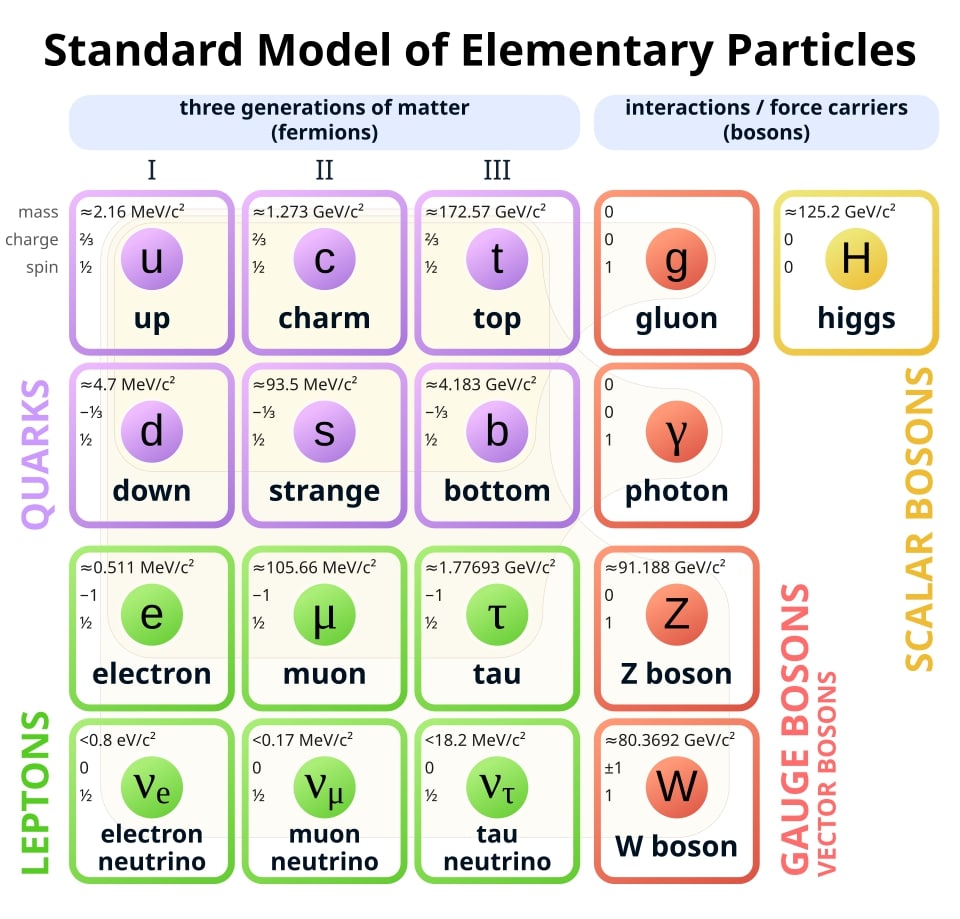
The possible answers to the above open questions lie beyond the Standard Model of particle physics. One may need to explore the existence of new, lighter particles that interact very weakly with Standard Model particles. This will require large amount of data collection and very high sensitivity to the signals of production of such particles which is under the scope of first stage of FCC viz., FCC-ee (precision measurement). It is also an imperative to explore the existence of new, heavier particles which will require high- energy facilities. The FCC-hh (high energy), the second stage of FCC aims to reach collision energies of 100 TeV (which is much higher than 13 TeV of LHC). As for the shape of the first stage electron–positron (e+e-) collider, the circular shape has been preferred (vis-a-vis linear) because circular shape enables higher luminosity, up to four experiments and offers the infrastructure for the subsequent second phase high-energy hadron collider.
***
References:
- CERN. Press release – CERN Council reviews feasibility study for a next-generation collider. 10 November 2025. Available at https://home.cern/news/press-release/accelerators/cern-council-reviews-feasibility-study-next-generation-collider
- CERN. Press release – CERN releases report on the feasibility of a possible Future Circular Collider. 31 March 2025. Available at https://home.cern/news/news/accelerators/cern-releases-report-feasibility-possible-future-circular-collider
- Feasibility Study for the Future Circular Collider is now finalized https://home.cern/science/cern/fcc-study-media-kit
- Future Circular Collider https://home.cern/science/accelerators/future-circular-collider
- FCC: the physics case. 27 March 2024. https://cerncourier.com/a/fcc-the-physics-case/
***
Related articles:
- CERN celebrates 70 years of Scientific Journey in Physics (2 February 2024)
- What are we ultimately made up of? What are the Fundamental Building Blocks of the Universe? (8 November 2021)
***
Some educational videos on FCC:
***

 that the Standard Model cannot address, one may need to look beyond the Standard Model of particle physics and explore the possible existence of new, lighter particles that interact very weakly with Standard Model particles, as well as explore the existence of new, heavier particles beyond the reach of existing LHC facility. The proposed Future Circular Collider (FCC) would make it possible to search for the existence of such fundamental particles beyond the Standard Model.)